Mercy Greater Than Our Past
Fr. Felix Phiri, SMM
Mercy Greater Than Our Past
In the Gospel of Luke, Jesus receives an invitation to dine at the home of Simon the Pharisee, . . .
. . . where a sinful woman approaches Him with profound humility and love. While Simon neglects the customary gestures of hospitality . . . washing Jesus’ feet, offering a kiss of peace, and anointing Him with oil . . . the woman performs all three acts, using her tears, her hair, and precious ointment. Simon judges both the woman and Jesus, but Christ reveals that her actions express the depth of her love and her desire for forgiveness. Through the parable of two debtors, Jesus teaches that the person who recognizes the greater forgiveness received will respond with greater love. He then assures the woman, “Your faith has saved you. Go in peace.”
The homily emphasizes that self-righteousness, rather than our sinful past, can become a significant obstacle to God’s grace. When we judge others, we close our hearts to gratitude, humility, love, and mercy, forgetting that everything we have received is ultimately a gift of God. The sinful woman demonstrates that our past does not have to define our future or prevent us from encountering Christ’s mercy. Saint Paul provides a similar witness: despite his persecution of the Church, he recognizes that he is who he is through God’s grace. The central invitation is to acknowledge our own need for mercy, resist judging others by their past, and allow God’s grace to lead us toward loving others as Jesus has loved us.
Hear more within this Meditation Media.
Mercy Greater Than Our Past
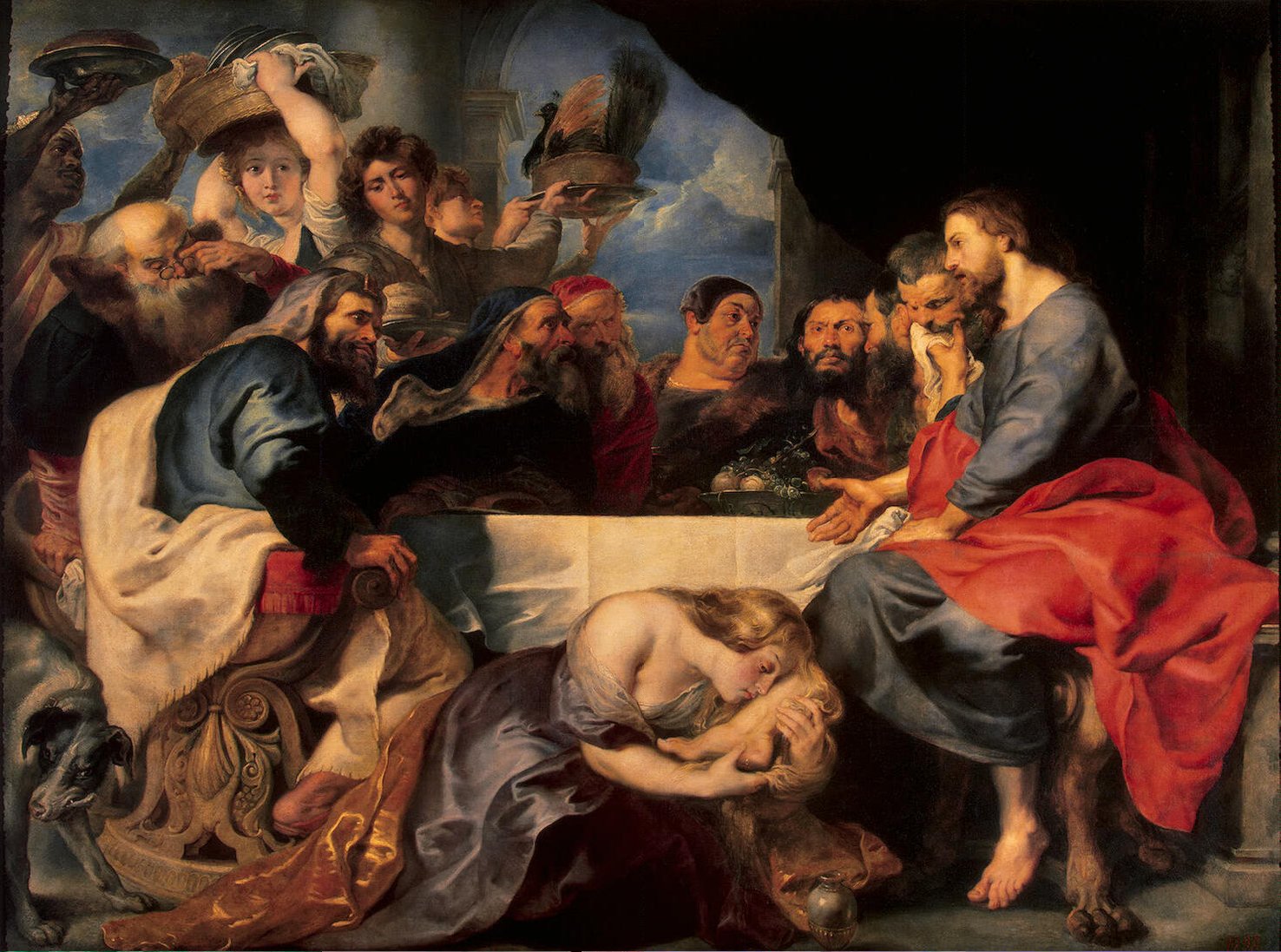
The Feast in the House of Simon the Pharisee: Flemish Painter: Peter Paul Rubens: 1618
Return to Meditation for the Week
Mercy Greater Than Our Past