The Habit of Holy Living
Fr. Hugh Gillespie, SMM
The Habit of Holy Living
This Homily reflects on the Gospel’s command, “Do not be afraid,” . . .
. . . through the life of St. Benedict, whose fear was not of persecution but of allowing the moral decay of the world to corrupt his soul. Leaving behind the comforts and temptations of Rome, Benedict sought solitude, prayer, study, and honest work, forming what the Church calls the “habit of holy living.” His life demonstrates that holiness is not usually built through dramatic moments but through the quiet, faithful rhythm of daily prayer, worship, and perseverance. His Rule became the foundation for monasteries that not only strengthened the Church spiritually but also preserved education, culture, and civilization throughout Europe during times of great instability. The message is that steadfast faithfulness, practiced consistently over years, has the power to transform both individuals and society.
The Homily then turns to the prophet Isaiah’s vision of God’s overwhelming holiness, drawing a profound connection to the Eucharist. Isaiah’s fear arose from recognizing his own sinfulness before the holiness of God, yet he was purified when a burning coal touched his lips. This Old Testament image foreshadows the Eucharist, where Christ Himself becomes the true “burning ember” from God’s altar, purifying those who receive Him with faith. We are reminded that regular participation in Mass is not merely an obligation but a gift through which Christ continually cleanses, strengthens, and renews His people. Just as Benedict’s steadfast habits changed history, the simple but faithful habit of gathering Sunday after Sunday allows God to gradually transform hearts, families, and ultimately the world.
Return to Meditation for the Week
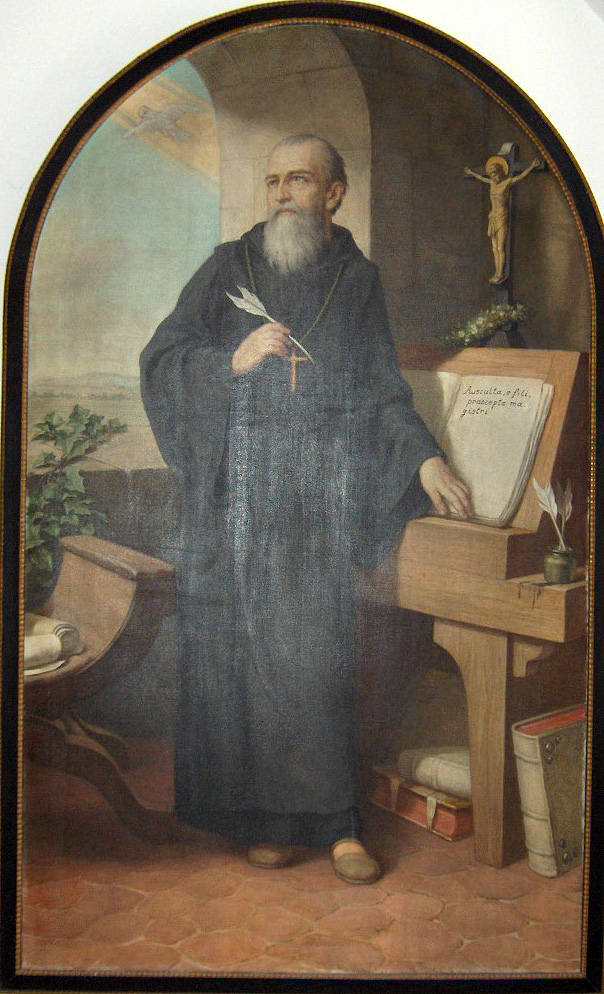
Saint Benedict Writing the Rules: German Painter: Herman Nigg: 1926
The Habit of Holy Living